
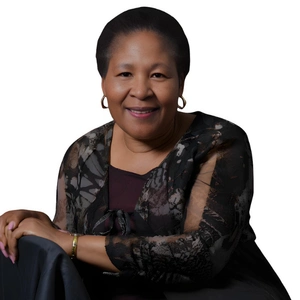
Johanna Mathibe-Neke
University of South Africa, South AfricaPresentation Title:
Women’s self-determination during antenatal care and childbirth: A South African case scenario
Abstract
Midwifery care is an integral component of Primary Health Care and a free public health service for pregnant women in South Africa, that is provided at primary, secondary and tertiary levels in both public and private healthcare facilities. Pregnant women pose a vulnerable and desperate population as their autonomy is compromised as soon as they enter the antenatal care clinic, due to non-engagement by midwives as reported in numerous ancient and recent studies conducted within South Africa. Vulnerability carries the risk to personal integrity, whether physical, psychological, moral or spiritual. Ideologies support the notion that vulnerability carries a prospect of one being either neglected or exploited with a potential of being wounded or open to attack. A reality for pregnant women that is morally unacceptable and a form of injustice.
There is growing evidence that clearly documents the harm experienced by women during childbirth through abuse and disrespectful maternity care as characterized by, amongst others, physical and verbal abuse, neglect, ineffective communication, non-involvement, limited health information leading to lack of informed decision-making. Research in Midwifery practice mostly focuses on women’s experiences, birth outcomes, provider qualities, situational life factors to name a few, and very few reflects on ethical practice, which is often compromised and therefore overriding the reproductive rights as outlined in the Bill of Rights, chapter 2 of the RSA Constitution, 1994.
The paper provides an analysis of the perspectives of women’s autonomy and informed decision-making, reflecting on the injustices women endure during antenatal care and childbirth in public healthcare settings. The possible interventions that aim to enhance humanity during the provision of antenatal care and childbirth are shared.
Biography
Johanna Mathibe-Neke holds a PhD and a master’s degree in Midwifery. She further holds a master’s in medicine (Bioethics and Health Law). She practiced midwifery for six years in antenatal, intrapartum, neonatal and postnatal units. She moved to academia during 1993 as a clinical coordinator in a Nursing School for four years. She was then appointed as a midwifery lecturer at a Nursing College for eight years. She later joined a residential university appointed as a Midwifery Lecturer for eight years. During 2012, she was appointed at a distance learning universityto pursue the supervision of master’s and doctoral students in Midwifery, Women’s health, health care ethics and Health Sciences. She is a C rated researcher for NRF. She supervised to completion 35 doctoral and master’s and is currently supervising 12 doctoral and master’s students. She presented 32 papers at National and international conferences. She published 29 articles in accredited journals with five manuscripts under review.

Organization Location
1309 Coffeen Avenue, STE 1200, Sheridan, Wyoming 82801, USA
General Enquiry
contact@scientexconferences.com
Finance Enquiry
finance@scientexconferences.com
Call us at
USA : +1 (689) 267 3738