

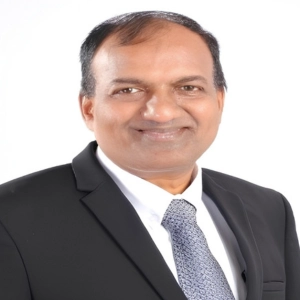
Rajes Khana
Institute Teknologi Sains Bandung (ITSB), IndonesiaPresentation Title:
Breast self-examination system using multifaceted trustworthiness : Observational study
Abstract
Background:Breast cancer is the leading cause of cancer mortality among women worldwide, yet many women avoid discussing breast health with physicians face to face and turn to social media instead. This creates a new risk: physicians who over-share patient data or behave unprofessionally online erode the trust the relationship depends on. Unlike generalized, group-level trust mechanisms on social platforms, the multifaceted trust model is personalized, context-dependent, transitive, and user-centric — a plausible fit for this setting, though untested in it.
Objective:We aimed to (1) identify trustworthiness indicators suitable for a breast self-examination (BSE) system, (2) design and implement a prototype embedding them, and (3) evaluate multifaceted trustworthiness in patient–physician interactions.
Methods:We built a prototype BSE system with nine features (user account, calendar, self-exam wizard, history, chat room, location, knowledge, video tutorial, forum) and embedded eight trustworthiness indicators as a patient-controlled rating mechanism, supported by an action-based trust algorithm. Between February 3 and March 30, 2020, we conducted open-ended interviews with 32 participants (16 physicians, 16 female outpatients), yielding 77 rated interactions. Pearson correlation analysis was performed in SPSS v24 (Cronbach α = .92).
Results:All eight indicators correlated strongly and positively with trust value (r > 0.70; P < .001). Honesty ranked highest (r = 0.91), followed by credibility (r = 0.85), confidence and faith (both r = 0.79), belief (r = 0.75), competency and reliability (both r = 0.73), and reputation lowest (r = 0.72). Trust grew over repeated consultations, with the first-to-second-week increase statistically significant (P = .03).
Conclusions:Embedding multifaceted trustworthiness indicators produced measurable, patient-controlled trust assessments and more ethical interaction. Honesty was most preferred. Because trust is transitive, new patients can select a physician using trust levels assigned by prior patients.
Biography
Rajes Khana has completed his Ph.D at the age of 48 years from Universiti Sains Malaysia, Malaysia. He is the Managing Director of ITSB Corporation, Indonesia. He is also as the Deputy Chairman of Association of Higher Education Healthcare Indonesia. Previously, He was a Rector at Universitas 17 Agustus 1945 Jakarta, Indonesia for 10 years. He has over 30 publications that have been cited over 124 times, and his publication h-index is 5.

Organization Location
1309 Coffeen Avenue, STE 1200, Sheridan, Wyoming 82801, USA
General Enquiry
contact@scientexconferences.com
Finance Enquiry
finance@scientexconferences.com
Call us at
USA : +1 (689) 267 3738